




Description
Upgraded features and a new lower price!
Delta-T Ready - Now the CDK24 comes standard with built-in dew heaters for both primary and secondary mirror. A $550 value!
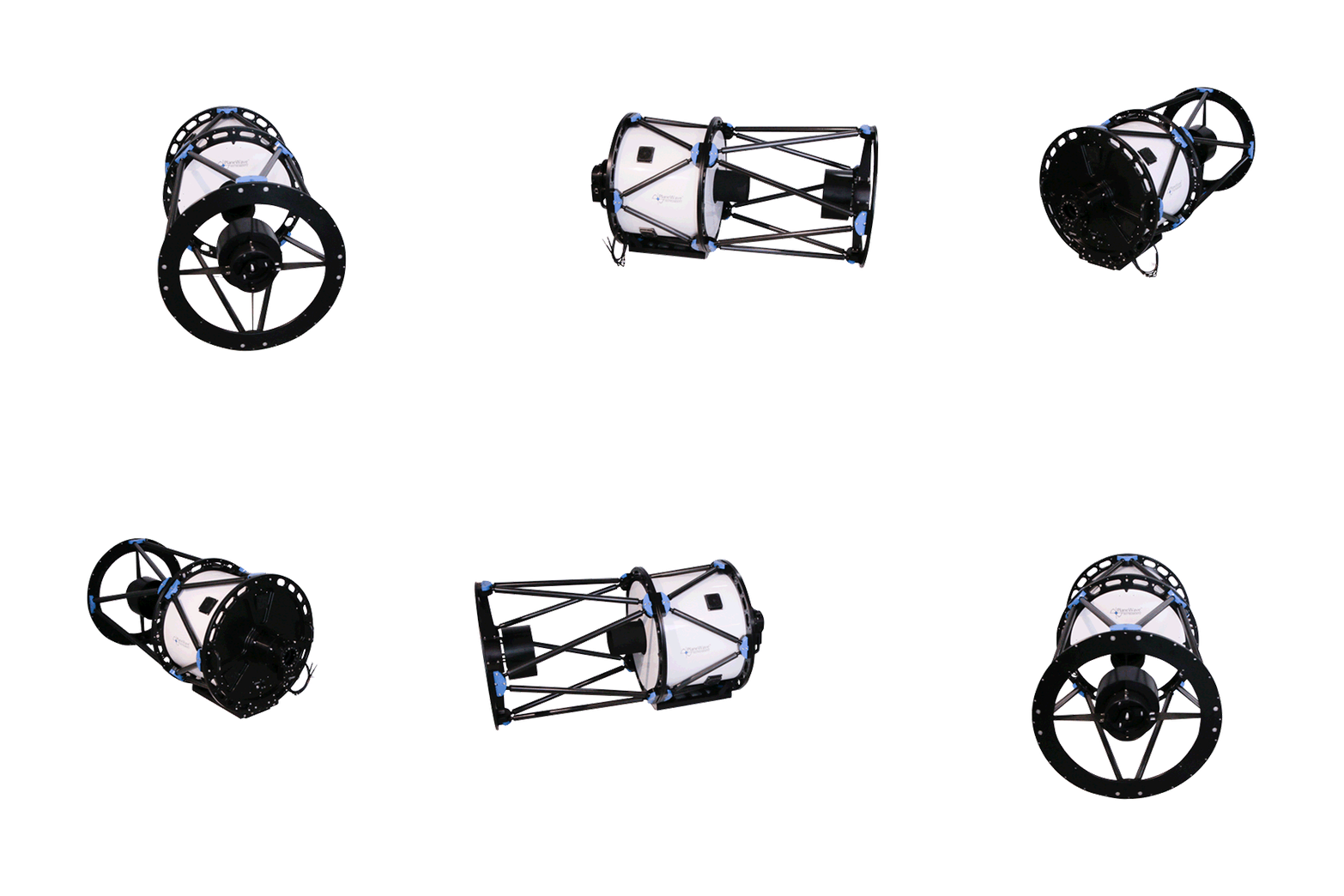
Introducing the PlaneWave Instruments CDK24, a 24 inch (0.61 m) f/6.5 Corrected Dall-Kirkham Astrograph telescope. The CDK24 has a dual truss design, with 3 cooling fans for the back of the primary mirror and 4 fans for the front surface of the primary mirror. The CDK24 covers a 70 mm field of view without any field curvature, off-axis coma, or astigmatism. The instrument weight is 240 lbs (109 kg) and comes standard with a back plate retaining ring ready to accept the focuser of your choice.
The CDK (Corrected Dall-Kirkham) Optical Design is an innovative solution for unsurpassed astroimaging quality at an affordable price. The CDK telescope design provides excellent imaging with large format CCD cameras while remaining superb for visual use. The CDK design far exceeds the off-axis performance of most commercial telescope designs including the Ritchey-Chrétien design.
This no-compromise design is unique in making the optical alignment forgiving and collimation very easy. This guarantees the user the best possible performance from the telescope. The end result at the image plane of the CDK design is no off-axis coma, no off-axis astigmatism, perfectly flat field (no off-axis defocus). The CDK design will give you pinpoint stars from the center to the corner of the field of view.
More about our Optical Design
Features:
Fused Silica Optics |
Fused Silica has a coefficient of thermal expansion six times lower than Borosilicate (Pyrex) glass, which means that as it cools down, fused silica preserves its shape to a high degree of accuracy. This translates into consistent optical performance and unchanging focus over temperature changes. |  |
Delta -T Ready |
For added dew prevention, the CDK24 is internally wired with polyimide film heater pads and temperature sensor, ready to be controlled with the optional Delta-T controller. | 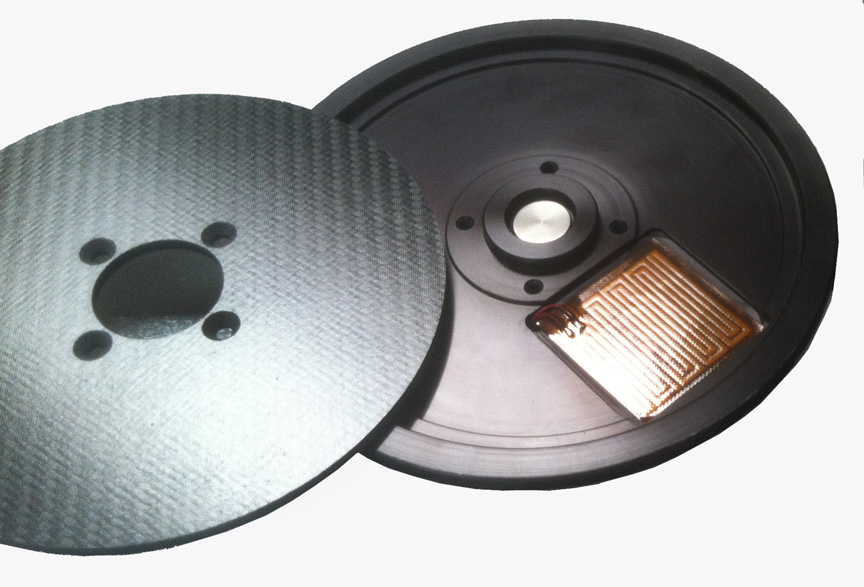 |
Carbon Fiber Truss Design |
Minimizes thermal expansion which causes focus shift with changes in temperature |  |
Dovetail expansion joint |
Allows for the difference in thermal expansion between carbon fiber and aluminum. The expansion joint allows the aluminum dovetail expand and contract without stressing the carbon fiber lower truss |  |
Cooling Fans |
Three cooling fans ejecting air from the back of the telescope and four fans blowing across the boundary layer of the mirror surface. This helps the telescope to reach thermal equilibrium quickly. The fans are controlled by a computer if the optional Electronic Focus Accessory (EFA Kit) is purchased. | 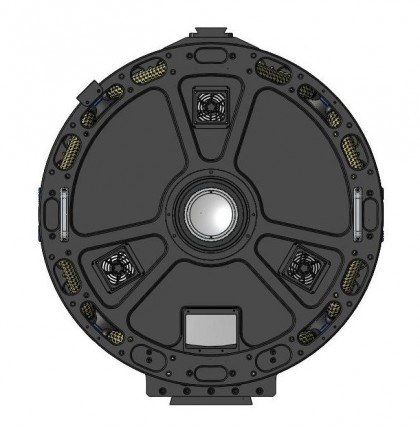 |


Peter Prendergast MD –
I’ve used the CDK 24 for more than two years. The observing time was divided between astrophotography and spectrometer work. Using the CDK 24 and as a member of an international group of researchers more than 5 papers were accepted for publication within the first year of our collaborative efforts. The light gathering capacity of this instrument meant every second of clear sky lead to superb data acquisition. Our Eschell spectrometer was kept extremely busy. The remarkable temperature stability of the CDK 24 was a gigantic asset For astro imaging the lack of distortion across the very large field of view meant images were crisp and more easily processed. Enough cannot be said about this instruments ability to cost effectively deliver volumes of high quality data. Using anything other makes no sense at all